
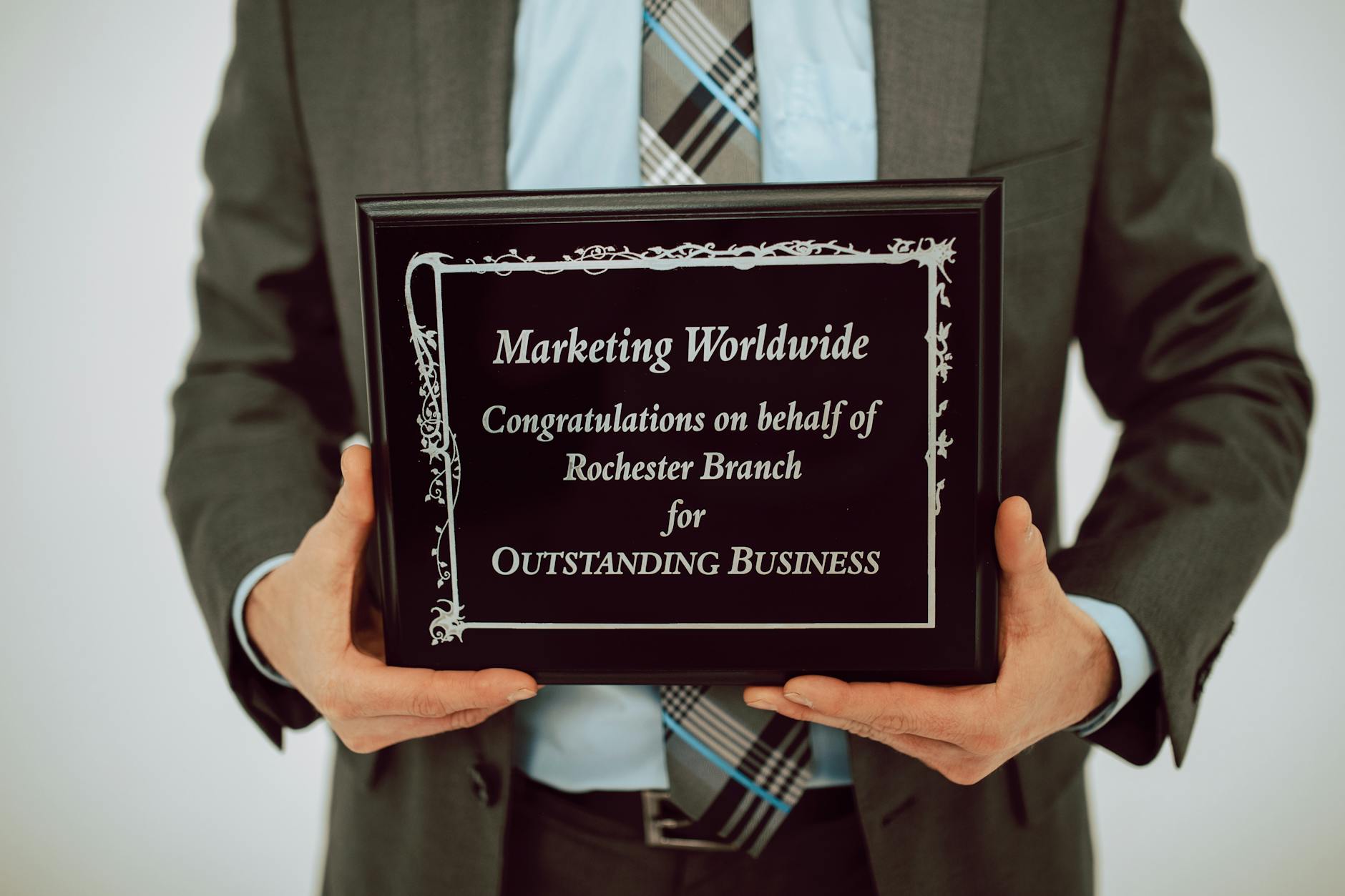
Recognition awards for company milestones sit in a curious place. Every business has them: the five-year anniversary, the hundredth client, the record-breaking quarter. Yet many organisations mark these moments with something hastily ordered, poorly worded, and quickly forgotten. The milestone deserves better, and so does the person or team being recognised.
Done well, milestone recognition reinforces the behaviours and loyalty that brought the business to that point. Done poorly, it signals that the achievement was noticed in name only. The difference usually comes down to three things: the right award format, the right message, and the right timing.
What counts as a company milestone?
Milestones worth recognising fall into two broad categories: business milestones and people milestones. Business milestones include things like anniversaries (the business turning 10, 25 or 50 years old), revenue targets, client number thresholds, opening a new location, or winning a significant contract. People milestones include years of service, promotions, retirements, and the completion of major projects.
Both categories deserve tangible recognition. A verbal congratulations from a manager is better than nothing, but a physical award creates a permanent record of the moment. It sits on a desk, hangs on a wall, or lives in a display cabinet, where it continues to communicate value long after the event itself.
Choosing the right award for the milestone
The format of the award should reflect the weight of the occasion. Not every milestone warrants a crystal tower, and not every long-serving employee wants a decorative plate. Matching the award to the moment takes a little thought, but the payoff is recognition that feels considered rather than perfunctory.
For business anniversaries, engraved glass or crystal awards work well because they carry a sense of permanence and prestige. A company turning 25 years old has earned something that looks like it belongs in a boardroom, not on a breakroom shelf. For project completions or team achievements, timber plaques and acrylic awards offer a slightly warmer feel that suits a broader audience. For individual years-of-service recognition, personalised trophies with engraved details (the recipient's name, their start date, years served) create a genuinely personal keepsake.
If you're working out how to frame different milestones into a structured program, the guide on years of service awards covers the building blocks for recognising long-term loyalty at every stage, from five years through to retirement.
Getting the wording right
The engraving on a milestone award carries as much weight as the award itself. Generic wording ("In recognition of service" or "Thank you for your contribution") wastes the opportunity. The best engraving is specific: it names the achievement, the person, and ideally the impact.
Compare these two examples for a 10-year service award:
- Generic: "In recognition of 10 years of service. Thank you."
- Specific: "Celebrating 10 years of exceptional commitment. Your work shaped who we are. [Name], [Company], [Year]."
The second version takes an extra minute to write and costs nothing more to engrave, but the recipient reads it differently. It acknowledges impact, not just duration. For more guidance on how to phrase recognition for professional settings, the resource on corporate award wording covers formats and tone across a range of occasions.
Timing and presentation matter as much as the award
The moment of presentation shapes how the award is received. A trophy handed over in a brief side conversation carries less weight than the same trophy presented in front of colleagues during a team meeting or company event. Recognition is amplified when others witness it.
For major business anniversaries, consider building the award presentation into a dedicated event. For individual service milestones, the next all-hands meeting or a team lunch works well, provided the presentation includes a genuine acknowledgement of the person's contribution rather than just their name and years served.
Timing within the year also matters. Presenting a five-year award six months after the actual anniversary signals that it was an afterthought. Keep a calendar of upcoming milestones so awards can be ordered, engraved, and presented at the right moment.
Business anniversary awards: a special case
When the milestone belongs to the company itself rather than an individual, the recognition strategy shifts slightly. Business anniversary awards are often given to clients, suppliers, and employees simultaneously, which means the format needs to work across a range of relationships.
A common approach is to commission a custom award or commemorative piece that reflects the company's identity: branded with the logo, finished in the company's colours, and engraved with the anniversary year and a brief founding statement. These serve double duty as a meaningful gift and a piece of brand storytelling.
For client-facing anniversary gifts, the presentation context is worth considering carefully. A thoughtful gift that arrives with a handwritten note tends to land better than one that arrives in a standard postage box with no personalisation. The effort signals that the relationship matters, not just the number of years.
Building a milestone recognition program
Ad hoc milestone recognition is better than nothing, but a structured program delivers stronger results. When employees know that their five-year, ten-year, and twenty-year milestones will be recognised in a consistent and meaningful way, they begin to view those thresholds as something to work toward. The anticipation itself reinforces retention.
A simple program sets out the milestones being recognised, the award format for each tier, the wording guidelines, and the presentation process. It doesn't need to be elaborate. A single-page internal policy covering these four elements is enough to ensure consistency across managers and departments.
Peer input can also strengthen milestone recognition. Asking a recipient's closest colleagues to contribute a line or two about that person's impact gives the award ceremony a warmth that top-down recognition alone can't replicate. If you're interested in the broader case for lateral recognition, the article on peer recognition programs covers the research and practical steps for making it work.
The physical award still matters
Digital badges and email shout-outs have their place in day-to-day recognition, but a physical award serves a different function. It exists in the real world. It takes up space on a desk, reflects light, and prompts questions from visitors. That ongoing visibility means the recognition keeps working long after the presentation day.
For milestone moments, a physical award is the appropriate response. It signals that the business took the time and made the effort to mark the occasion with something lasting. That signal matters to the recipient, and it matters to everyone else who sees it.
Whether you're marking a company's 20th year in business, recognising an employee's decade of service, or celebrating a team that delivered a record result, the right award chosen carefully and presented well will do what recognition is supposed to do: make the person feel genuinely seen.