
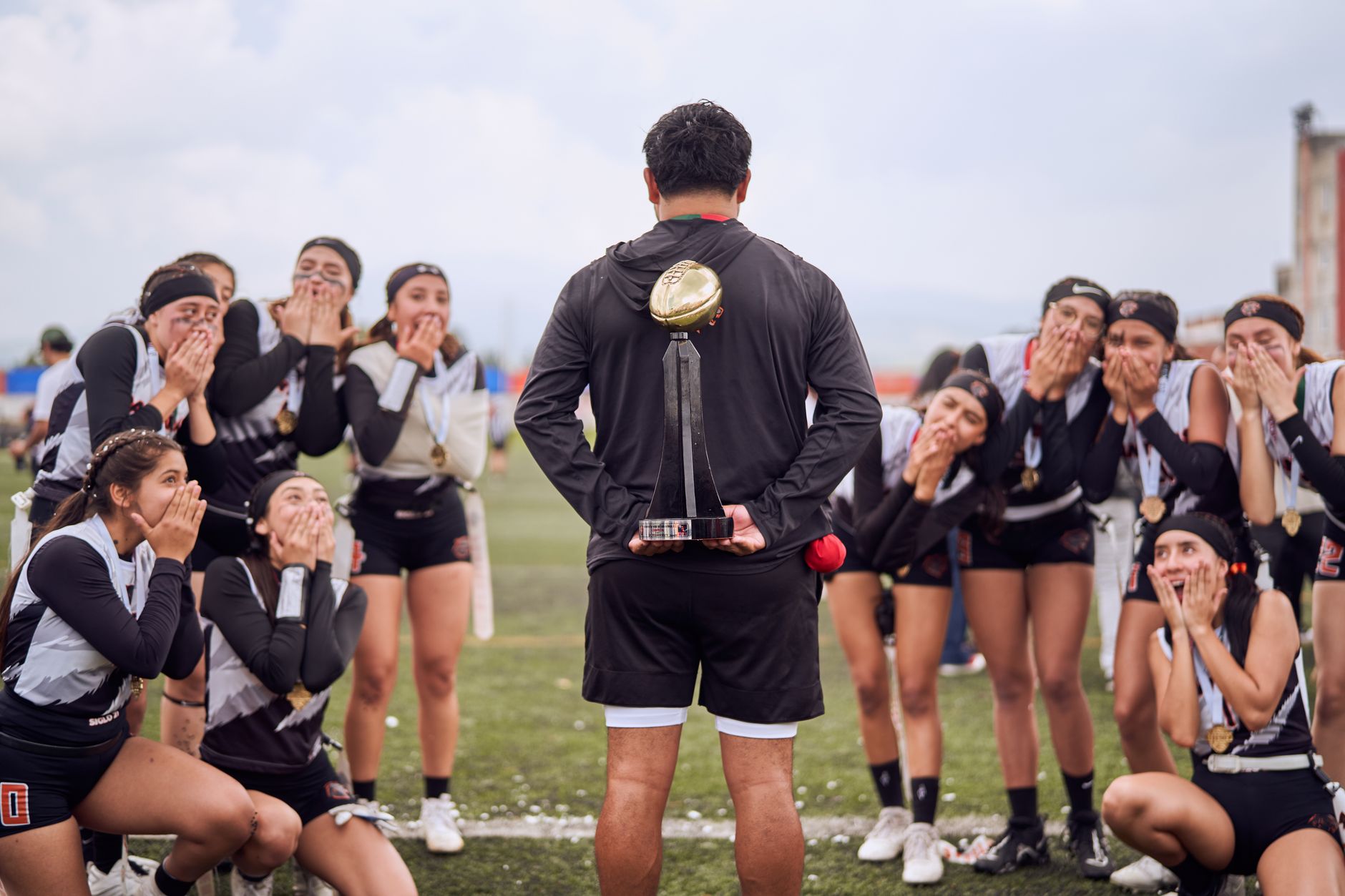
Coach of the year awards sit in a tricky spot. The recipient didn't score the goals, swim the fastest lap or kick the winning field goal. What they did is harder to put into words: they built the conditions for other people to succeed. That's why engraving a coaching award requires a different approach than engraving a standard player trophy. The wording needs to reach beyond the season record and say something true about the person behind the bench.
What follows are practical wording ideas, format guidance and real examples for coach of the year awards across youth, community, school and senior competition levels.
What sets coach of the year engraving apart
Most trophy engraving answers one question: who won, and in what? For a coach of the year award, the question is different. It's not what they won. It's what they gave. The wording should reflect that shift. Phrases built around performance metrics tend to feel hollow on a coaching award. Phrases built around character, development and culture tend to land far better.
That doesn't mean you can't mention results. A season record is a legitimate part of the story. But it works best as context, not as the headline. Lead with the person, then let the season speak for itself.
Engraving ideas by format
Short tribute lines (for smaller award faces)
These work well on medals, smaller acrylic awards and plaques with limited text space:
- "For the season you built, not just the season you won."
- "Coaching that made the whole club better."
- "The standard you set didn't start at the first whistle."
- "More than a season's work. A legacy in progress."
- "For leading from behind and lifting from the front."
Standard multi-line formats (for plaques and trophy bases)
Three to four lines gives you room to name the season, the club and the recipient without crowding the design. A reliable structure runs: name, award title, club or organisation, season year, then one tribute line. For example:
Sarah Nguyen
Coach of the Year
Eastlakes United FC
2026 Winter Season
"For every player you believed in before they believed in themselves."
That last line does the work. The rest is record-keeping. If you can only personalise one element of the engraving, make it the tribute line.
Extended tributes (for perpetual plaques and prestige awards)
Larger awards give you room to run two or three sentences. Use that space to describe what the coach actually did, not just the category they won:
Awarded to Mark Thornton, whose commitment to player development, training culture and club values set a standard that reached well beyond the scoreboard. Coach of the Year, Redbank Swim Club, 2026.
Keep the language direct. Avoid words like "inspirational" or "dedication" on their own. They're vague enough to mean anything. Instead, name something specific: training culture, player development, game-day composure, long-term retention of junior athletes.
Tone guide: matching words to competition level
The tone of coach of the year engraving should shift with the context. Junior and youth awards sit differently to senior or elite competition awards.
Youth and junior sport: Keep the language warm and human. The coaching being recognised often centres on encouraging participation, managing young athletes through pressure, and building confidence. Phrases like "for making training the best part of their week" or "for seeing potential before the athlete did" resonate here.
Senior community and amateur sport: This level often involves unpaid coaches who juggle the role alongside work and family. Acknowledge the commitment alongside the craft. "For every hour on the training paddock that nobody counted" is an example that works without sounding sentimental.
Elite, state or national level: Here the language can carry more precision. The audience knows the competitive stakes, and the engraving can reflect them: "For building a squad that competed at the highest level of the state competition" or naming specific achievements like finals appearances or championship wins.
Common mistakes to avoid
The biggest mistake in coach of the year engraving is treating the award like a player trophy. Don't open with "In recognition of outstanding athletic achievement." Coaches aren't athletes in this context. They're builders.
The second mistake is leaning on generic superlatives. "An exceptional coach" tells the reader nothing. "A coach who rebuilt the under-16 program from twelve players to forty-two in three seasons" tells them everything. Specificity is the difference between engraving that gets read once and engraving that gets read every time someone walks past the trophy cabinet.
Third: don't forget the season or the club. Engraving without a date and organisation name loses context the moment the award leaves the presentation venue. Future recipients of a perpetual award need to know who came before them. Even on a one-off award, the context anchors the memory.
Pairing the words with the right award format
The engraving wording and the award format work together. A short tribute line is wasted on a large timber plaque with room for a paragraph. A long tribute is unreadable on a small acrylic disc. Think about the two together from the start.
For coach of the year awards presented at a formal club night, a glass or crystal piece with deep laser engraving carries the weight the occasion deserves. For a community or youth sport setting, a timber plaque with colour-fill engraving gives warmth without formality. Westlakes Trophies offers personalised gifts for coaches across a range of formats and materials, so it's worth considering how the size and substrate will carry your chosen wording before you finalise the text.
If the award is part of a broader night that includes player trophies and team recognition, you'll want the coach of the year piece to read differently. Engraving ideas for sports player of the year awards covers the adjacent territory and helps draw a clear distinction between the two categories. A coach of the year award that uses the same language as a best-and-fairest trophy misses the point of both.
A few ready-to-use examples
These can be used as-is or adapted to suit your award, club and recipient:
- "For the team culture you built, the results were the easy part."
- "Coaching of the Year. For the one who made the whole squad better, not just the starting line-up."
- "In recognition of a coach who measured success by the player who almost gave up, and didn't."
- "For every after-training conversation, every early arrival, every player you carried through a hard season."
- "The scoreboard remembered the wins. This award remembers the coach."
Good coach of the year engraving doesn't try to summarise the season. It says something true about the person. When you get that right, the award stays on the shelf long after the trophy for that year's best-and-fairest has been tucked away in a drawer.