
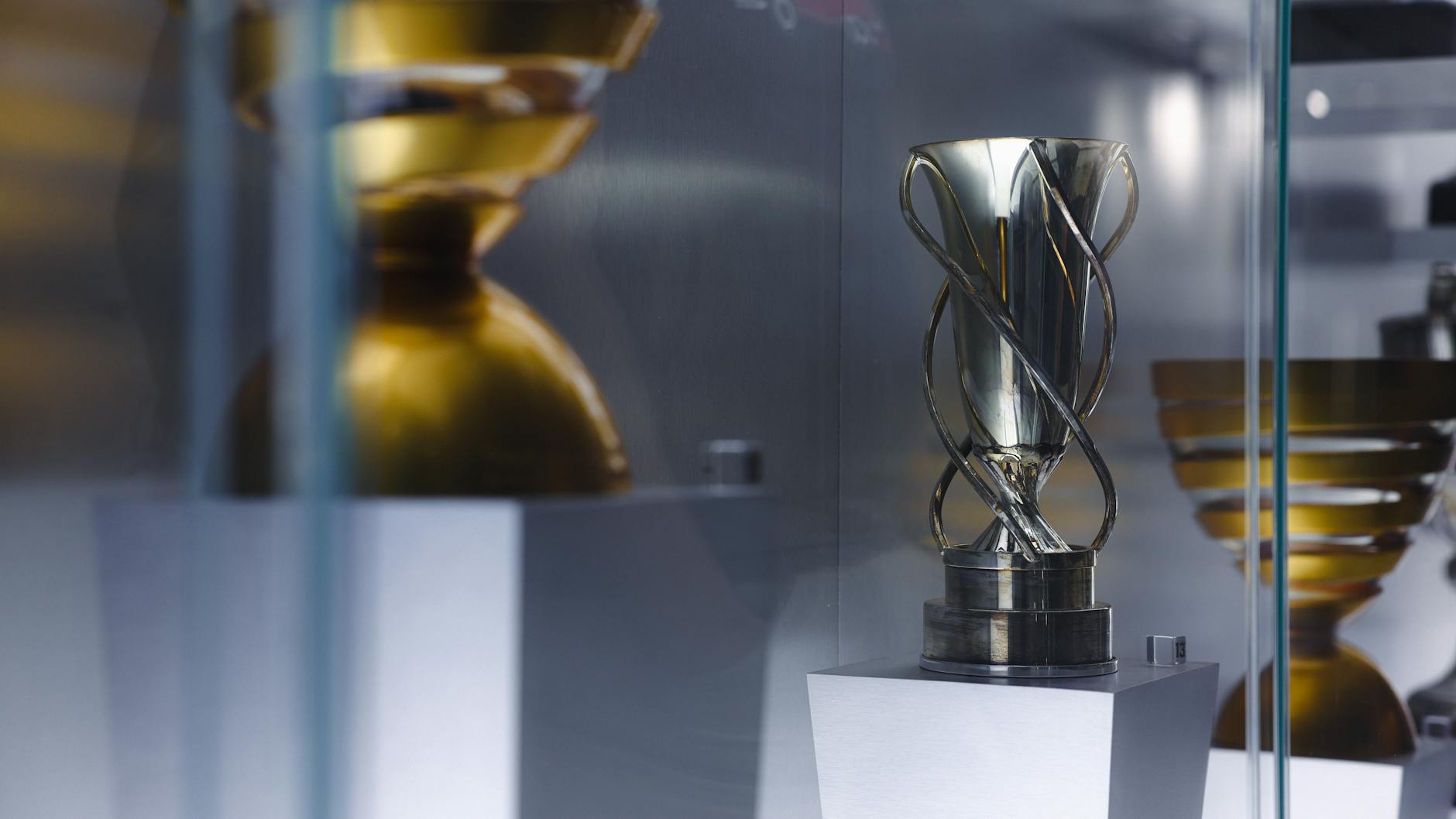
Floating mount trophies sit in a narrow design category that most buyers walk past without realising what they're looking at. The award element, whether a disc of acrylic, a slice of glass, or a sculpted resin form, is attached to the base by a thin rod, a recessed pin, or a clear standoff that seems to disappear from certain angles. The result is a trophy that looks like it's hovering. That visual tension is the point, and it works.
Westlakes Trophies produces floating mount designs across acrylic, glass and timber bases, with the suspended element customised by laser engraving, UV colour printing, or sand carving depending on the material. The technique isn't new, but interest in it has grown steadily as organisations look for awards that stand out on a shelf without needing to be oversized.
How the floating effect is achieved
There are three main methods, and each suits different materials and budgets.
- Clear standoff pins: A short acrylic or polycarbonate rod connects the main element to the base. Because the rod is optically transparent, the eye skips over it and reads the element as suspended. This is the most common approach for acrylic-on-acrylic designs.
- Recessed metal post: A thin stainless steel or brass rod is set into a drilled channel in the base and locks into the underside of the floating piece. The rod is narrow enough to be nearly invisible from the front, and the metal adds a premium feel to glass and crystal combinations.
- Tensioned wire: Less common and more expensive to produce, this uses fine stainless cable running from base to element. It reads well from a distance and photographs extremely cleanly. It's worth considering for presentation pieces and high-value corporate awards.
The choice of mounting method affects how the trophy handles over time. Clear standoff pins are sturdy and low-maintenance. Tensioned wire designs need careful packing if the award is being posted or couriered interstate.
Which materials work best
Acrylic is the most popular base material for floating mounts because it machines cleanly, accepts threaded inserts without cracking, and can itself be laser-engraved with a frosted finish on the underside to diffuse light upward through the piece. A clear acrylic base under a floating acrylic disc, with an LED light channel routed into the base, is one of the most striking configurations Westlakes Trophies produces.
Glass bases suit floating metal or glass elements when the design calls for something heavier and more formal. The weight of the base counterbalances the visual lightness of the suspended piece, which reads as intentional rather than fragile. If you're considering a glass-based design, the post on glass trophies and why crystal-clear awards endure covers the material properties worth understanding before you order.
Timber bases are a warmer option. A floating acrylic or glass element above a jarrah or blackwood plinth creates a contrast that reads as contemporary without abandoning the craft associations of timber awards. The grain grounds the piece; the float adds drama. These work particularly well for long-service and board-level recognition, where the award needs to read as both substantial and considered.
What you can engrave on a floating element
The suspended piece in a floating mount design is usually the primary engraving surface, which changes how you think about layout. Because the element is viewed from multiple angles (and from below, if it's translucent), what's behind the engraving matters. A frosted laser-engraved logo on clear acrylic reads beautifully when backlit; the same design on an opaque surface loses that depth.
UV colour printing on the floating element is increasingly popular for corporate awards where brand colour accuracy is non-negotiable. Westlakes Trophies applies UV colour printing on awards directly to the face of acrylic and glass elements, which means a full-colour logo, a photograph, or a multicolour design can sit on the suspended piece without degrading over time. The ink is cured hard and doesn't scratch off in normal handling.
For text-heavy designs, laser engraving is still the cleaner choice. Recipient name, award title, year and a short citation all fit on a 100mm disc if the layout is planned carefully. Don't try to fit everything; the floating element is a centrepiece, not a plaque.
When a floating mount is the right call
Not every occasion suits a floating design. They work best when the award is meant to be displayed rather than tucked in a drawer, and when the recipient has a desk, shelf or cabinet where it'll live permanently. They're a natural fit for:
- Corporate recognition awards at board or executive level
- Annual club trophies that will sit in a cabinet year-round
- Architectural and design industry awards where the object itself needs to communicate craft
- School leadership prizes where longevity of display matters
They're less well-suited to junior sport, where durability in a school bag is a real concern, or to bulk-order events where cost per unit has to stay low. For high-volume sporting presentations, a standard column or resin figure design is more practical. Floating mounts are better thought of as a premium tier within an award program rather than a replacement for every category.
Sizing and proportion
Proportion is where floating mount designs go wrong most often. The suspended element needs to be large enough to read clearly but not so large that the mounting mechanism is stressed. As a rough guide, Westlakes Trophies recommends that the floating element spans no more than 60 percent of the base width. A 200mm wide base can carry a floating disc up to about 120mm in diameter comfortably. Go wider and the visual relationship tips from elegant to precarious.
Height of the float matters too. An element mounted 30mm above the base creates a subtle hover; 60mm creates a more dramatic gap. The right choice depends on the overall height of the award. For a 250mm finished height, a 40–50mm float gap is a reliable starting point.
Ordering and lead times
Floating mount trophies require more production steps than a standard column trophy, so lead times are longer. Westlakes Trophies generally needs 7 to 10 business days for a custom floating mount design from artwork approval to dispatch. If the award is for a presentation night with a fixed date, build that buffer in early. The post on getting presentations done on time at a large awards night has practical advice on planning the full timeline, including where awards procurement sits relative to other preparation tasks.
Send final engraving text and logo files together when you place the order. Changes after the element has been cut or engraved add cost and days, and some materials can't be reworked at all once the engraving is done.
Floating mount trophies cost more than equivalent-sized standard trophies. That premium is real and worth acknowledging up front when budgeting. For the right occasion, it's also the reason the award gets kept on the desk rather than moved to the garage after a year.