
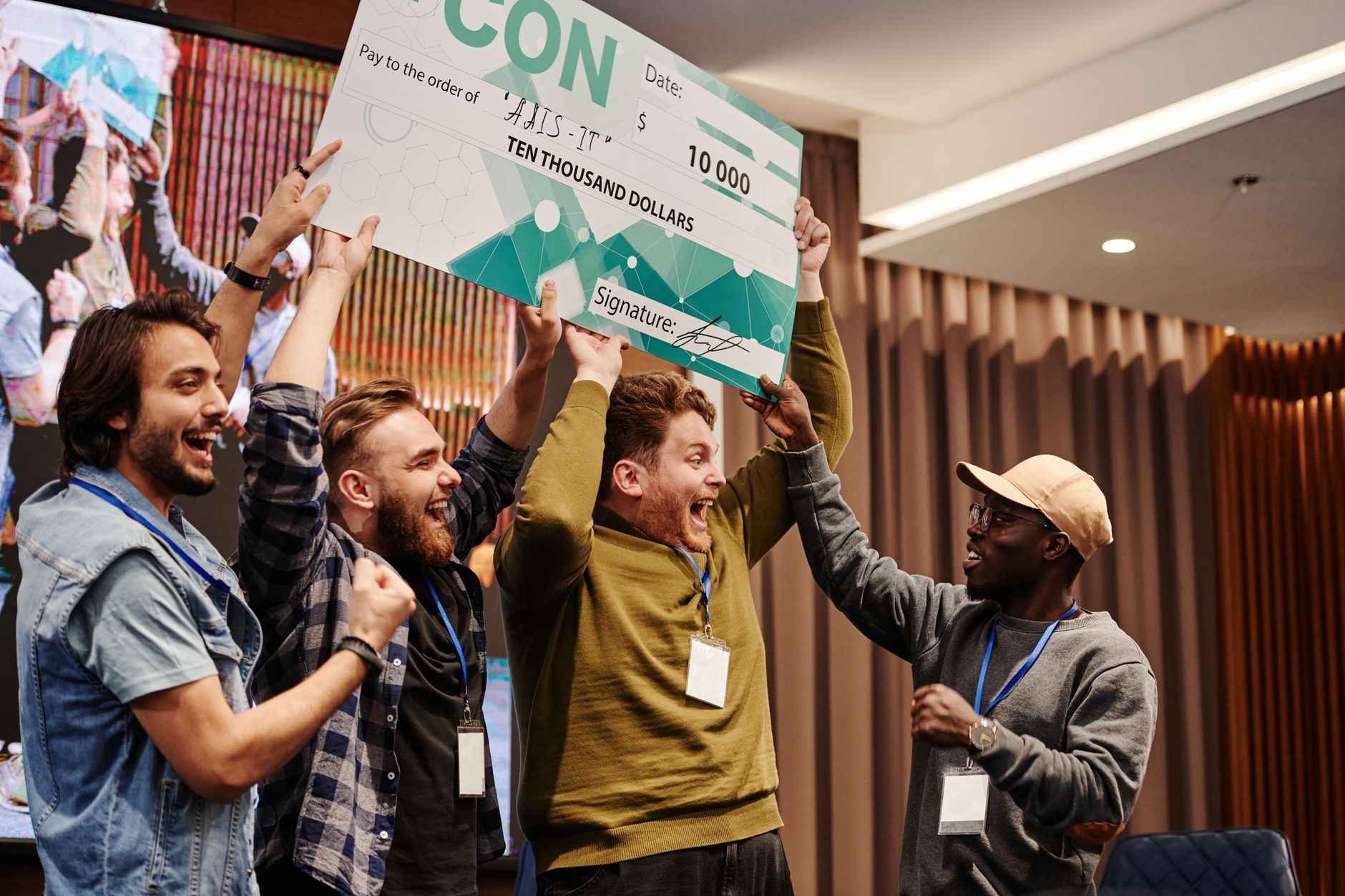
Individual awards are the default in most workplaces. One name gets called, one person walks up, and the rest of the room claps. That model works for standout performers. It doesn't work for the project that shipped on time because six people pulled together for three months. Team-based recognition fills that gap, and companies that use it well tend to see cultural benefits that individual programs simply can't generate on their own.
What team-based recognition actually is
Team-based recognition means formally acknowledging a group for a shared achievement rather than picking one person out of it. That might be a department that hit a quarterly target, a cross-functional crew that delivered a product launch, or a service team that lifted customer satisfaction scores over a sustained period. The award, the moment, and the credit all belong to the group.
It sounds simple. In practice, most businesses don't do it because they haven't built the infrastructure for it. Individual programs are easier to administer: one name, one award, one handshake. Group recognition requires thinking about how the achievement gets defined, who counts as part of the team, and what the physical award actually looks like when it's shared between eight people.
None of those questions are hard to answer. They just require deliberate design.
Why groups respond differently to recognition than individuals do
There's a social dynamic at work that individual awards can't replicate. When a group is recognised together, every member of that group hears the achievement described in public, in full, attributed to the whole. No one is left wondering whether their contribution counted. That clarity is powerful, especially in workplaces where collaboration is expected but rarely credited.
Individual recognition, done badly, can actively damage team cohesion. If the same person wins every quarter, colleagues start to notice. If recognition always flows to client-facing staff and never to the people behind the scenes, those behind-the-scenes contributors disengage. Employee of the month programs are one of the most common recognition tools in business, but they carry exactly this risk when they're the only recognition mechanism in place.
Team awards sidestep the zero-sum problem. No one loses when a group wins.
What to recognise at the team level
The best team recognition programs tie awards to outcomes the group actually controlled. Vague criteria ("best team spirit") feel hollow quickly. Specific ones land because the group knows exactly what they did to earn the recognition.
Categories worth considering include:
- Project delivery: a team that brought a complex initiative in on time and on budget
- Customer outcomes: a team whose NPS or satisfaction score improved over a defined period
- Innovation: a group that proposed and implemented a measurable process improvement
- Safety or compliance: a department with a sustained record in a high-risk environment
The criteria should be set before the recognition period starts, not invented afterwards to justify a decision already made. Pre-defined criteria make the award feel earned rather than awarded, and they give every team something to work toward.
How to design the physical award for a group
This is where most businesses stall. Handing a single trophy to a team of ten feels anticlimactic. Giving every member an identical individual piece feels impersonal. The answer is usually a combination: one centrepiece award that lives in the workplace as a shared symbol, plus individual pieces each team member takes home.
A framed or engraved plaque mounted in the team's area works well as the shared element. It states the achievement, the period, and the names of every contributor. Westlakes Trophies engraves this kind of recognition piece on timber, metal, glass and acrylic, with all team names included. The individual pieces can be smaller: a custom medal, a branded acrylic token, or a desk plaque with the team name and the individual's role. Recognition awards for company milestones follow the same logic, pairing a statement piece with individual keepsakes so the moment is both publicly anchored and personally owned.
Colour-fill engraving, UV printing, or a laser-etched logo can tie the individual pieces visually to the group award, so the set reads as intentional rather than assembled from whatever was in stock.
Timing and frequency
Team recognition programs work best when they run on a predictable cycle. Quarterly is manageable for most organisations. Annual is too infrequent to sustain momentum. Monthly can feel rushed if the criteria require meaningful achievement.
Some businesses run both: a quarterly team award for operational outcomes, and a larger annual recognition event where the team of the year is announced. If you're building toward an annual event, a structured recognition calendar keeps the program from going quiet between cycles and gives teams regular touchpoints so the final award doesn't feel like it came from nowhere.
Consistency matters more than frequency. A program that runs reliably twice a year earns more credibility than one that happens unpredictably four or five times and then quietly disappears.
Presenting team awards well
The presentation moment is where the recognition lands emotionally, and it's worth spending time on. Bring the whole team forward together. Read the achievement out specifically, not generically. Name contributions where you can without making it feel like a sub-ranking within the group. Let the team have a moment to stand together in front of the room.
If you're handing out individual pieces at the same time, hand them to the team leader to distribute rather than calling names one by one. It keeps the group intact and reinforces that the award belongs to all of them equally.
Photograph the moment and share it internally. A photo of a seven-person team with their award on the company intranet or Slack channel does more recognition work than the ceremony itself, because it reaches the whole organisation rather than just the people in the room.
The case for running both programs in parallel
Team-based recognition doesn't replace individual recognition. The two serve different purposes and work best together. Individual awards acknowledge personal excellence. Team awards acknowledge collective achievement. A business that only does one of these is missing half the story of how work actually gets done.
Westlakes Trophies supplies custom awards for both formats, from individual desk plaques and medals to group centrepiece trophies engraved with every team member's name. Getting the physical award right is the part of the program that lasts. Everything else fades. The award stays on the desk, or on the wall, for years after the meeting where it was handed out.